Australian family-owned

Garage door seals for every gap around your door

Brush seals for the top and sides, a rubber seal for under the door, for sectional and roller garage doors anywhere in Australia. Fit it yourself in an afternoon with our videos, or we fit it for you in Sydney, Melbourne and Brisbane.

Which garage door do you have?

Pick your door and the kit picks itself. Prices are live from the shop.

  • Sectional (panel lift) door

    Hinged panels that run up tracks and lie flat under the ceiling. The gaps down each side and across the top are usually 5–25 mm, so the kit uses a 25 mm brush. Single kits suit openings up to 3 m wide, double kits up to 6 m.

    Kits from $199

  • Roller door (roll-a-door)

    One corrugated steel curtain that rolls into a drum above the opening, on garages, sheds and workshops. The gaps beside the guide tracks and above the curtain are commonly 20–50 mm, so the kit uses a 50 mm brush.

    Kits from $209

  • Under the door: the bottom seal

    The rubber strip along the bottom edge is the part that wears out: it hardens, cracks and lets water run in. Our 80 mm EPDM rubber bottom seal in a heavy-duty aluminium track closes gaps up to 35 mm, on sectional and roller doors. Full kit, track only or replacement rubber.

    From $109

Every kit comes as top only, sides only, top and sides, or the full perimeter with the bottom seal. Got a tilt door (one rigid panel that swings out and up)? We don’t recommend our kits for those, and we’ll say so. Not sure which door you have? The FAQ explains the three types, or email us a photo.

What’s getting into your garage?

The six reasons people go looking for a garage door seal, and the part that fixes each one.

  • Water coming in under the door

    Rain running in under the door means the bottom rubber is worn, missing or too thin for the gap. The 80 mm EPDM bottom seal sits down on the floor and closes gaps up to 35 mm. For a bigger gap or a driveway that slopes in, read our door dam advice first.

  • Dust and leaves on the floor

    Daylight down the sides of a closed door is a 10 mm gap, and wind pushes fine dust and dry leaves straight through it. Brush seals on the top and sides stop it. A line of dust just inside the door means the bottom seal needs attention too.

  • A draughty garage, home gym or workshop

    A garage you use as a gym, workshop or office is only comfortable if the wind isn’t coming through it. Sealing the whole perimeter stops the draughts, and the rooms behind the garage hold their temperature better.

  • Mice, spiders, cockroaches and snakes

    A mouse fits through a 6 mm gap, and a roller door offers it 30. Sealing the top, sides and bottom of the door takes away the easy way in for mice, spiders, cockroaches and the occasional snake.

  • Embers in bushfire season

    CSIRO found embers involved in more than 80% of the house ignitions in the 2003 Canberra fires. Our fire retardant kits use a flame-retardant PA6 brush tested to AS 1530.2 with a flammability index of 1, which meets the BAL-FZ brush requirement, in carriers that won’t burn.

  • A worn, cracked bottom rubber

    Most garage doors never had top and side seals; the seal that does wear out is the rubber under the door. Replace it with our rubber in its track, or if you already have our track, slide in a new length of rubber: no tools beyond a knife.

What is a garage door seal?

Brush for the edges that move, rubber for the bottom. And the other names it goes by, so you know what to look for.

Every garage door is built with gaps: down both sides, across the top and along the floor. A garage door seal closes them. For the top and sides, that’s a brush seal: a dense row of UV-stabilised PA6 (nylon 6) filament set in an aluminium carrier that fixes to the wall and lintel around the door, so the filament brushes the door as it moves and springs back when it closes. You’ll also hear it called a bristle seal, brush strip, seal strip, garage door side seal or top seal, weather strip, dust seal or draught excluder. Same part.

For under the door, it’s a rubber seal: our 80 mm EPDM rubber profile in a heavy-duty aluminium track that screws to the bottom rail and squashes down onto the floor. Hardware stores call it a garage door weather seal or weather strip; people also say bottom rubber, floor seal or, in American guides, door sweep. A threshold seal or door dam is a different thing, glued to the floor, and we only recommend one together with the rubber on an oversized gap.

Put the two together and every edge of the door is sealed. That’s a garage door seal kit, and ours come in single (up to 3 m wide) and double (up to 6 m) sizes for sectional and roller doors, with a weatherproof brush or a fire retardant one for bushfire-prone areas. Everything but the tools is in the box, including the adhesive.

Brush seal in its aluminium carrier fitted beside a sectional garage door
A brush seal in its aluminium carrier on a sectional door. Hold a $3 sample against your own gap before you order.
  • Sectional doors25 mm brush closes the 5–25 mm gaps at the top and sides.
  • Roller doors50 mm brush closes the 5–50 mm gaps beside the tracks and above the curtain.
  • Under either door80 mm EPDM rubber closes gaps up to 35 mm and follows an uneven floor.

What Our Customers Say!

Why buy your garage door seals from us?

Because we’re the people who fit them, and have been since 2017.

  • A 10-year warranty, in writing

    Every kit is covered for ten years against manufacturing defects, whether you fit it or we do, and we’ve been fitting these seals since 2017 without a warranty claim. Ask any other supplier what their warranty is. Read ours.

  • Tested, not just claimed

    Our fire retardant brush was tested by a NATA-accredited laboratory to AS 1530.2 and came out with a flammability index of 1, which meets the AS 3959 requirement for garage door seals at BAL-FZ, the highest bushfire level. We’ll email the test report to you or your certifier; the caveats are here.

  • Honest advice from the people who fit them

    Email a photo of your door with your gap measurements and we’ll confirm the kit before you spend a cent, or tell you our kit isn’t right for your door. We’d rather turn away a tilt door than sell a seal that won’t work on it.

  • One quality, different sizes

    We don’t sell a cheap grade and a good grade. Dense PA6 brush, heavy-gauge aluminium carriers and EPDM rubber in every kit, imported to our own specification and held to a strict standard, and they’re the seals on our own garage. Free shipping Australia-wide, dispatched the same or next business day; $3 samples if you’d like to feel it first.

Seal Your Garage is run by Liam and Georgia from South West Sydney, around three young kids. When you email, one of us answers. More about us.

How it works: measure, order, fit

Most customers fit their own kit in one to two hours. Here’s the whole process, and the videos.

  1. Measure, or send a photo

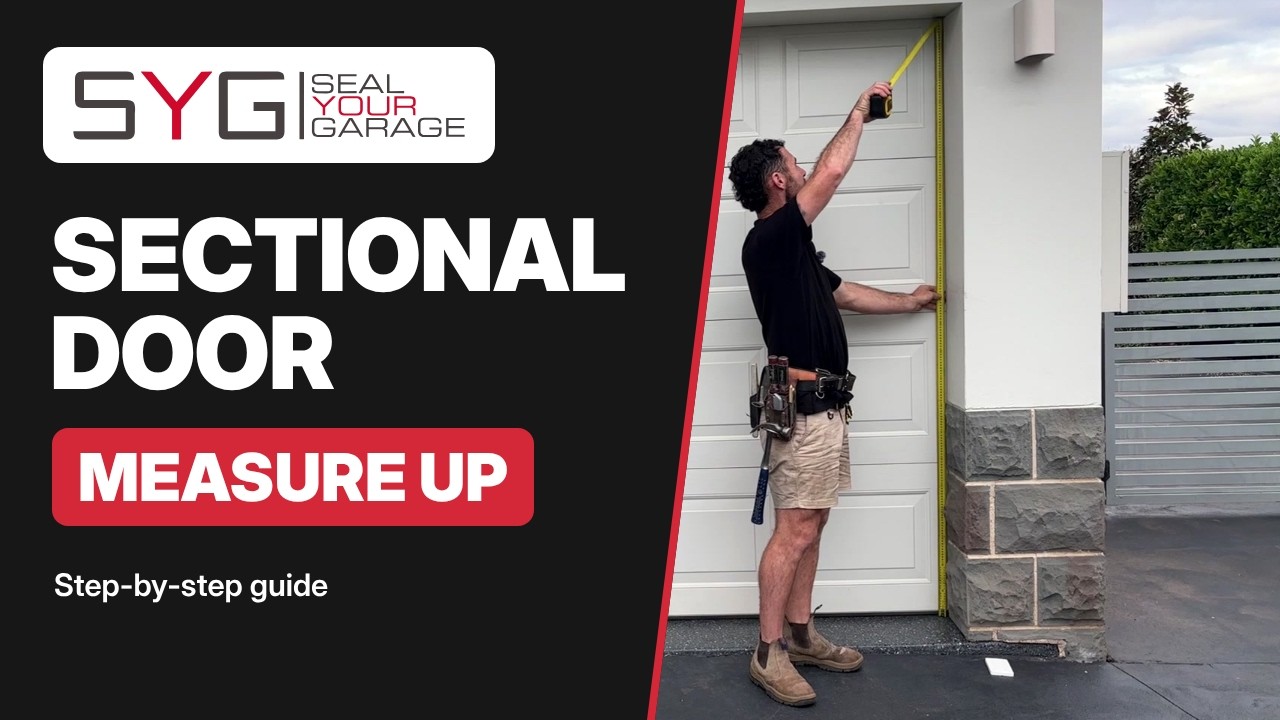
    Measure the gap at the top and down both sides (the measuring video shows exactly where), or email a photo of the door with the gaps marked and we’ll confirm the kit.

  2. Order your kit

    Pick sectional or roller, single or double, weatherproof or fire retardant, and the edges you want sealed. Add the bottom seal for the full perimeter.

  3. Fit it, or we will

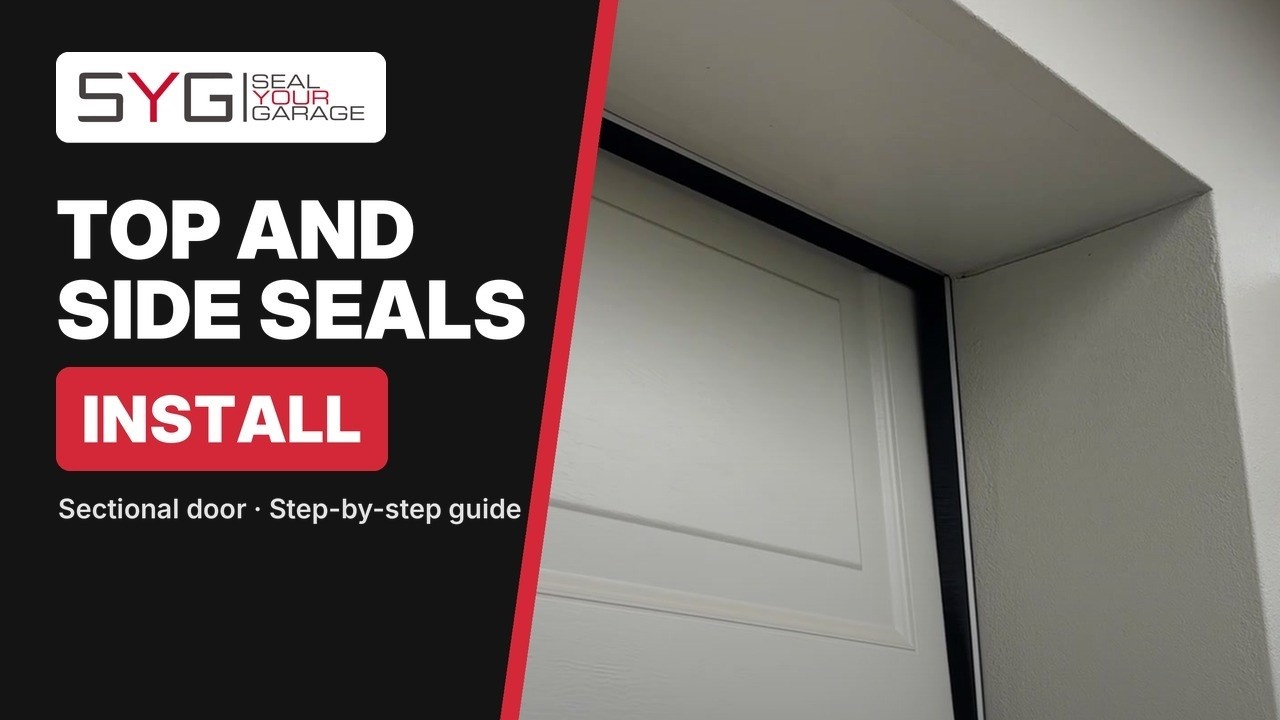
    Follow the install video and printable guide: tape measure, hacksaw, drill and caulking gun, one to two hours, then leave the door open for an hour or two while the adhesive sets. Or book us in Sydney, Melbourne or Brisbane.

  4. Backed for ten years

    Every kit carries our 10-year warranty. If something’s not right, email a photo and we’ll sort it out.

Watch before you buy

Every SYG kit has a step-by-step install video and a printable guide, filmed on real doors. The full set is on the install guides page and our YouTube channel.

Garage door seal questions

The ones we’re asked most. The full FAQ has thirty more.

Which garage door seal do I need?

It depends on the door and the gap, not the brand. Sectional (panel lift) doors take the 25 mm brush kit for the 5–25 mm gaps at the top and sides; roller doors take the 50 mm brush kit for gaps up to 50 mm; the gap under either door takes the 80 mm rubber bottom seal, up to 35 mm. Choose fire retardant if you’re in a bushfire-prone area and weatherproof if you’re not, then single or double by the width of the opening.

Not sure? Email a photo with your three gap measurements and we’ll tell you, or read the longer answer.

What’s the difference between a brush seal and a rubber seal?

Where they go. Rubber seals by pressing against a surface, which is perfect under the door where it sits on the floor; run rubber along the side of a moving door and it drags, tears and perishes. Brush filament bends with the door every time it moves and springs back, so it lasts on the edges that see movement, and dense filament stops dust, draughts, pests and embers nearly as well as a solid seal. So: brush on the top and sides, rubber on the bottom.

I don’t know what the seal is called. What should I search for?

If it’s a strip of bristles for the side or top of the door, you want a brush seal; it’s also sold as a bristle seal, brush strip, garage door side seal, weather strip, dust seal or draught excluder. If it’s the rubber along the bottom edge of the door, you want a bottom seal; people also call it the bottom rubber, rubber seal, floor seal or, at the hardware store, a garage door weather seal. Search either on this site and you’ll land in the right place, or just email us a photo of the gap.

How much do garage door seals cost?

Our weatherproof brush seal kits start at $199 for a sectional door and $209 for a roller door (single door, one edge sealed); the fire retardant kits cost a little more for the flame-retardant brush. Bottom seals start at $109 for replacement rubber, with the full track-and-rubber kit priced on the bottom seal page.

Every kit ships free anywhere in Australia, samples are $3 delivered, and if you’d like us to fit it, installation is from $249 per door in Sydney, Melbourne and Brisbane. There’s one quality, not a cheap grade and a good grade, so the difference in price between kits is size, edges and brush type, nothing else.

Can I just replace the worn rubber under my garage door?

Yes. Pull the old rubber out of its track. If you have our aluminium track, order the rubber-only option on the bottom seal kit and slide the new 80 mm length in. If the track is another brand’s, or damaged, or there isn’t one, order the full kit: the new track screws straight over the old one or to the bottom rail, and most people finish in about an hour with the bottom seal install video. Our rubber is made for our track, so if you’re unsure what you have, email a photo of the track end first.

Will a garage door seal stop water coming in?

The rubber bottom seal stops water running in under the door, which is where almost all of it comes from, as long as the gap is within 35 mm. Brush seals on the top and sides stop wind-driven rain and spray, but a brush isn’t a waterproof barrier. What no seal can do is beat gravity: if the driveway slopes down to the garage and water pools against the door, a seal slows it and a drain or a door dam used with our rubber fixes it. Send a photo and we’ll tell you which you need.

Are your seals bushfire (BAL) rated?

The fire retardant kits are. AS 3959 requires the brushes or weather strips that seal a garage door’s edge gaps at BAL-FZ to have a flammability index no higher than 5; the flame-retardant PA6 brush we use was tested by AWTA Product Testing (NATA-accredited) to AS 1530.2 and scored 1, and the carriers are non-combustible aluminium. The same kit covers BAL 12.5, 19, 29 and 40 sites. Two honest caveats: the filament melts and smokes rather than carrying flame, so it can be damaged in an extreme fire and that isn’t warranted; and compliance is assessed for the whole building by your certifier, so a seal meets the seal clause but doesn’t make a building compliant on its own. More on bushfire seals, and the test report is available by email.

Can I fit it myself, and how long does it take?

Yes; most of our customers do. A top-and-sides brush kit takes one to two hours with a tape measure, pencil, hacksaw or drop saw, drill, caulking gun and a step ladder; the adhesive is in the box. A bottom seal takes about an hour and screws on. Every kit has a step-by-step video and printable guide, and if you get stuck partway through, email us a photo. In Sydney, Melbourne and Brisbane we can also fit it for you.

Will it fit my B&D, Steel-Line, Gliderol or other brand of door?

Almost certainly. The seals mount on the wall and lintel around the door, not on the door itself, so the brand doesn’t matter; the gap does. We’ve fitted them to B&D (Panelift and Roll-A-Door), Steel-Line, Gliderol, Centurion, Taurean and Danmar doors, on garages, sheds and workshops. The one exception is a tilt door, which we don’t recommend our kits for.

Where are you, and do you ship Australia-wide?

We’re a family business in South West Sydney, and every kit ships free to anywhere in Australia, usually dispatched the same or next business day: allow 1–3 business days to metro areas in the eastern states, 3–6 to rural eastern areas and 4–9 to SA, WA and the NT (shipping details). Installation is available in Sydney, Melbourne and Brisbane.