
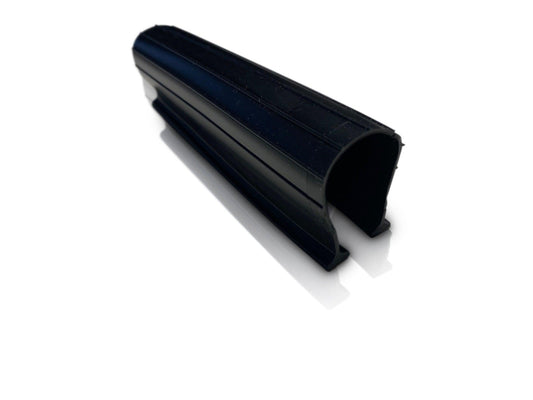
Collection: Garage Door Bottom Seals

Garage door bottom seals for sectional and roller doors: an 80 mm EPDM rubber seal in a heavy-duty aluminium track that closes gaps up to 35 mm under the door, so rain stops running in, dust stops drifting under and mice lose their way in.

Buy the full kit, the track on its own, or just the rubber to replace a worn, cracked bottom seal. Single and double door sizes, 50 m bulk rolls for installers, free shipping Australia-wide and a 10-year warranty.

Read More
Garage Door Bottom Seals

The straight answers

Water under the door is the number one reason people email us. Here’s what the bottom seal does, which option to order, and how to fit it.

  • 35 mmbiggest under-door gap closed
  • 80 mmEPDM rubber profile
  • 10 yearswarranty on every kit
  • Screw-fixover the old track

What is a garage door bottom seal?

Bottom rubber, floor seal, weather seal, weather strip: the strip under the door.

The bottom seal is the rubber strip along the bottom edge of the door that squashes against the floor when the door closes. Depending on who you ask it’s the bottom rubber or rubber seal, the floor seal, the weather seal or weather strip (what hardware stores call it) or, in American guides, the door sweep. On most Australian sectional and roller doors it’s a rubber or vinyl profile slid into a track on the bottom rail, and after a few years of sun and grit it hardens, cracks and shrinks. The first sign is usually a wet patch inside the door after rain, or a line of dust along the floor.

Our kit replaces or upgrades it: an 80 mm EPDM rubber profile in a heavy-duty aluminium track. EPDM is the rubber used for car door seals and roofing membranes because it shrugs off sun, ozone and water, and 80 mm of it is soft and deep enough to take up 35 mm of gap and follow the dips and slopes in an uneven slab. It fits sectional (panel lift) doors and roller doors, and the track screws over the old carrier or straight to the bottom rail. A floor-mounted threshold seal or door dam is a different product; see the questions below for when you need one.

What it fixes

Everything that comes in under a garage door.

  • Water coming in under the garage door

    A rubber seal sitting down on the floor is what stops rain running in under the door. If the driveway slopes towards the garage, a seal slows the water and a drain fixes it; for a gap over 35 mm, a door dam used together with our rubber closes it.

  • A gap under the door, or an uneven floor

    Slabs dip, driveways fall away and doors get hung high. 80 mm of soft EPDM follows the floor and closes gaps up to 35 mm without the door needing adjustment.

  • Dust and leaves along the floor

    Dust that settles in a line just inside the door is coming under it, not around it. The bottom seal closes that gap; brush seals handle the top and sides.

  • Mice, cockroaches and snakes

    A mouse fits through a 6 mm gap, and the gap under a garage door is their front door. A rubber pressed down on the floor removes it.

Which bottom seal option?

Full kit, track only or rubber only, in single and double sizes.

  • Single door

    Doors up to 3 m wide.

    from $109

    View single
  • Double door

    Doors up to 6 m wide.

    from $149

    View double
  • Bulk roll (trade)

    50 m of rubber or 51 m of track, for installers.

    from $1,100

    View bulk

Then choose what you need

  • Full kit: aluminium track, 80 mm EPDM rubber and fixings, for a door with no track, a damaged one, or a bigger gap.
  • Carrier only: the aluminium track on its own, if you’re replacing a bent one or already have our rubber.
  • Rubber only: a new length of 80 mm EPDM to slide into our track when the old one wears. No tools beyond a knife. It’s made for our track, so if you don’t already have our track, order the full kit.

Our rubber is made for our track. If you’re replacing the rubber in another brand’s track, email a photo of the track end and we’ll tell you whether it will take it.

What’s in the box

Everything except the drill.

Rubber
80 mm EPDM profile; closes gaps up to 35 mm and follows an uneven floor
Track
heavy-duty aluminium carrier; screws over the old carrier or straight to the bottom rail
Fixings
included in the full kit
Fits
sectional (panel lift) and roller doors from B&D, Steel-Line, Gliderol, Centurion, Taurean and Danmar and most others; not tilt doors
Made
imported to our own specification and held to a strict quality standard; it’s the seal on our own garage
Warranty
10 years against manufacturing defects

Fitting a bottom seal

The quickest seal in the range to fit.

Take the old rubber out. Whether the old carrier comes off too is up to you: the new track can screw straight over it, or you can remove it for a cleaner job. Screw the new track to the bottom rail with the fixings supplied, slide the rubber in, and the door’s done; most customers finish in about an hour. Watch the install below or read the printable guide.

If the gap under your door is more than 35 mm, or the floor falls away badly on one side, email us a photo and your biggest measurement before you order. The honest fix is a floor-mounted door dam used together with our rubber: the dam brings the floor up to meet the door, and the rubber seals down onto it. On its own a dam leaves gaps; on its own a rubber can’t reach.

Bottom seal install: sectional and roller doors · 5:24 · Watch on YouTube · Printable guide (PDF)

Bottom seal questions

The ones we’re asked most. More on the FAQ page.

Will a bottom seal stop water coming into my garage?

It stops water running in under the door, which is where almost all of it comes from, as long as the gap is within 35 mm. What it can’t do is beat gravity: if your driveway slopes down towards the garage and water pools against the door in heavy rain, a seal slows it and a drain or a door dam fixes it. Send us a photo and we’ll tell you which you need.

How do I replace a worn garage door bottom seal?

Pull the old rubber out of its track. If the old track is sound you can leave it: our aluminium track screws straight over it, or to the bottom rail of a sectional door or the bottom of a roller curtain if you take it off. Fix the track with the screws supplied, slide the 80 mm rubber in, and you’re done; most people take about an hour. Already have our track? Choose the rubber-only option on the single or double kit above. The bottom seal install guide has the video and a printable step-by-step.

Should I get a threshold seal or door dam instead?

Not instead: together, and only if the gap is over 35 mm. A door dam is a strip glued to the floor across the opening; it raises the floor to meet the door, and our rubber seals down onto it. For a normal gap the rubber bottom seal alone is the better job, with nothing on the floor to trip on or drive over. For an oversized gap, use both, and fit the bottom seal first so the dam goes where the rubber lands.

Does it fit a roller door as well as a sectional door?

Yes. The track screws to the bottom rail of a sectional (panel lift) door or the bottom of a roller door curtain, over the old carrier or in its place. It doesn’t suit tilt doors. If your door is unusual, email a photo of the bottom rail and we’ll confirm.

Can I just replace the rubber?

If you have our track, yes: order the rubber only, pull the old length out and slide the new one in. The rubber is the only part of the seal that wears, because it sits on the floor, so this is how the kit is meant to be maintained. If you have another brand’s track, send a photo first; our rubber is made for our track and may not fit theirs.

What about the combination brush-and-rubber bottom seals?

We don’t sell them, on purpose. A sound rubber bottom seal already stops water and dust; adding a brush under it adds cost and a strip of filament to wear away on the concrete, not more sealing. Put the money into a good rubber in an aluminium track instead.